
Understanding Website Key Performance Indicators (KPIs)
TL;DR (Too Long; Didn’t Read): Website KPIs help you understand how your site is really performing. By tracking metrics like traffic, bounce rate, time on site, conversion rate, and click-through rate, you can spot what’s working, fix what’s not, and turn website data into actionable marketing insights.
Website KPIs
Your website is doing more than just “existing” online. Every visit, click, scroll, and form fill tells a story about how people are interacting with your brand. The challenge? Most businesses don’t know how to read that story clearly.
That’s where website KPIs come in.
Website KPIs (Key Performance Indicators) help you move past surface-level metrics and understand what your site is really saying. They translate activity into insight, showing you not just what’s happening, but why it matters and where to focus next.
What Are Website KPIs?
At their core, website KPIs are metrics that measure how effectively your site supports your business goals. Whether your objective is generating leads, driving sales, educating users, or building trust, KPIs help determine how well your website is doing its job.
Instead of guessing what’s working or relying on gut instinct, KPIs give you concrete data to guide smarter decisions. They show how users arrive at your site, how they engage with your content, and what actions they take before leaving.
In short: KPIs turn traffic into understanding.
Common Website KPIs to Know
While every business has different priorities, there are several core website KPIs that nearly every organization should be tracking.
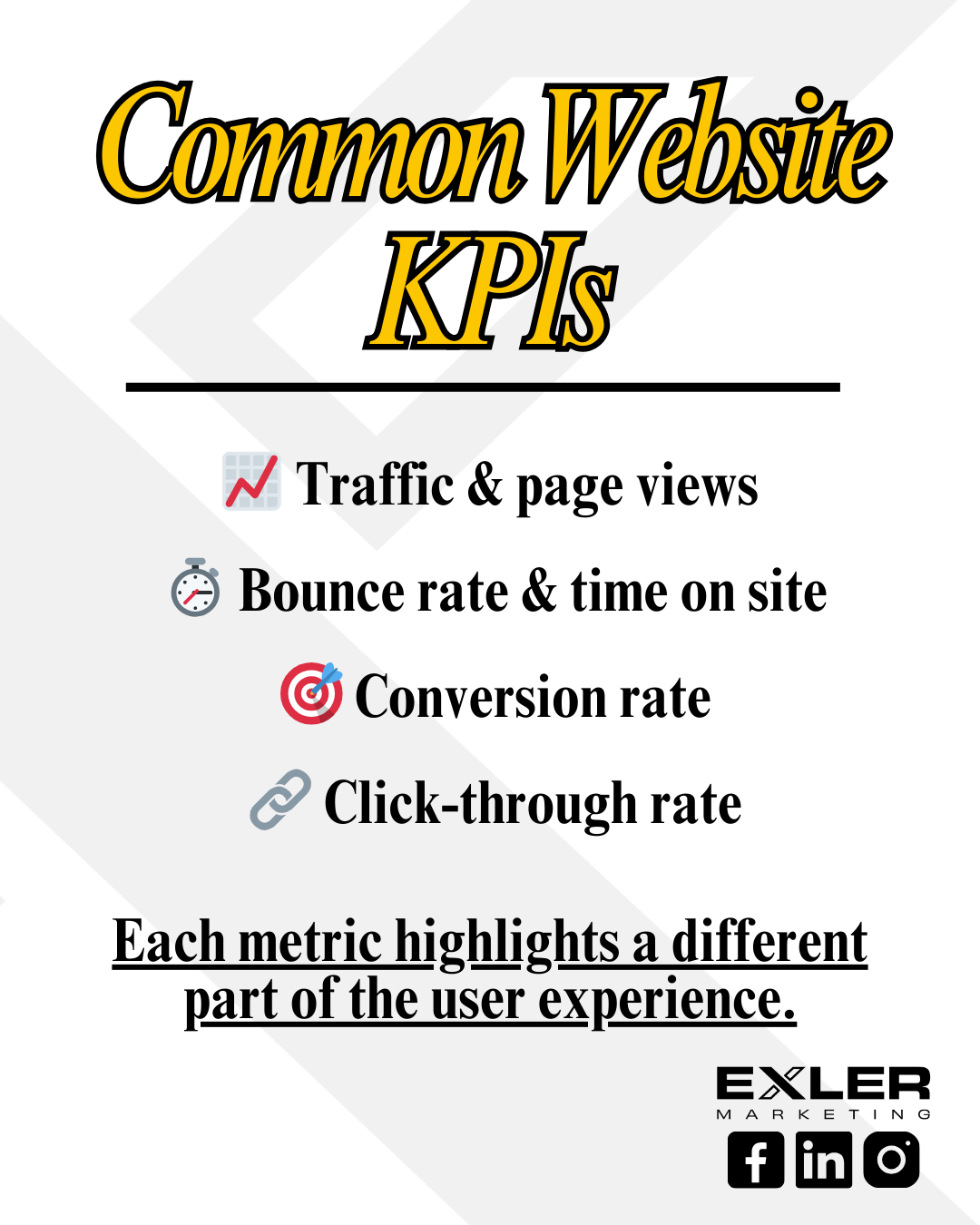
Traffic and page views measure how many users are visiting your site and which pages attract the most attention. These metrics help identify visibility, reach, and content interest. However, traffic alone doesn’t tell the full story, high numbers don’t always mean high performance.
That’s where bounce rate and time on site come in. Bounce rate shows how many users leave after viewing just one page, while time on site indicates how long visitors stay engaged. Together, these metrics reveal whether your content is relevant, engaging, and easy to navigate.
Conversion rate is one of the most critical KPIs. It measures how many users complete a desired action, such as filling out a form, making a purchase, or signing up for a newsletter. Conversion rate connects website activity directly to business outcomes, making it a key indicator of effectiveness.
Finally, click-through rate (CTR) tracks how often users click on links, buttons, or calls to action. CTR helps evaluate messaging, design, and placement, showing whether users are compelled to take the next step.
Each of these KPIs highlights a different part of the user experience. Together, they create a clearer picture of how your website performs as a whole.
Why Website KPIs Matter
Website KPIs matter because they show you what’s working, and what isn’t.
They help identify patterns, spot problem areas, and uncover opportunities for improvement. For example, high traffic paired with low conversions may indicate unclear messaging or weak calls to action. A strong time on site but low click-through rate might signal engaging content that lacks direction.
Understanding how KPIs are calculated also allows you to compare performance over time. Trends are often more valuable than single data points. Are conversions improving month over month? Is bounce rate decreasing after a redesign? These insights inform strategic decisions and help prioritize changes that have real impact.
Without KPIs, optimization becomes guesswork. With them, your website becomes a tool you can actively refine and improve.
Turning Numbers Into Insights
Tracking KPIs is only the first step. The real value comes from interpreting the data and applying it to your marketing strategy.
When you understand what your metrics are telling you, you can make confident decisions about content, design, messaging, and user flow. You can focus resources where they matter most and align your website more closely with your overall business goals.
At Exler Marketing, we believe your website should work as hard as you do. KPIs help ensure it does, not just by reporting numbers, but by revealing insights that drive growth.
If you’re ready to move beyond surface-level stats and start using your data strategically, it may be time to take a closer look at what your website is really saying.
If you’re looking for more practical tips to help your business build trust and grow smarter, stick with us here on #TheGroundFloor. We’re going to continue sharing insights that help you level up your digital presence one step at a time. On Exler Marketing’s social media pages, we’re constantly sharing quick, practical marketing tips, including the one featured here! Check it out on our Instagram here.
Keep exploring #TheGroundFloor and stay connected with us on Facebook, Instagram, and LinkedIn.
