
Don’t Just Sell, Provide Value
TL;DR (Too Long; Didn’t Read): Audiences don’t follow brands to be sold to, they follow brands that teach, inspire, or help them solve problems. By focusing on value-first content instead of constant promotion, businesses build trust, authority, and long-term loyalty, which ultimately leads to stronger conversions and sustainable growth.
The Problem With “More Ads”
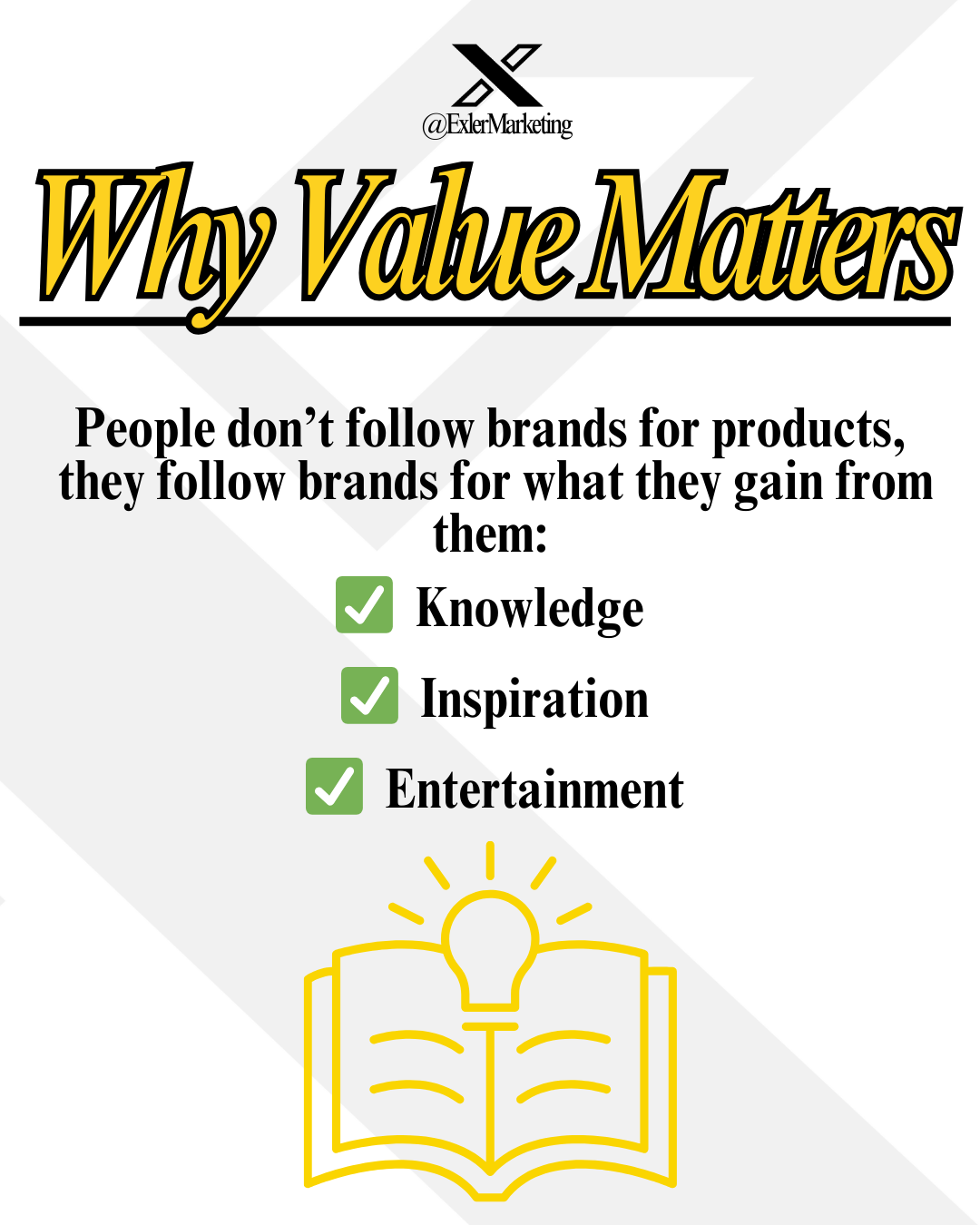
Consumers today don’t need more ads. They need clarity. They need insight. They need something that actually helps them move forward. Yet many brands are still operating with an outdated playbook: pushing products, repeating offers, and increasing frequency in hopes that visibility alone will drive results. The reality is that attention is no longer captured through volume. It is earned through value. If you want loyalty, engagement, and long-term growth, the strategy has to shift. Don’t just sell. Provide value.
Why Value Wins in a Crowded Market
We are living in a content-saturated world where every scroll presents hundreds of options. Your audience isn’t just comparing you to your competitors; they’re comparing you to creators, influencers, news outlets, and entertainment platforms. People don’t follow brands for products alone. They follow brands for what they gain from them. That gain typically falls into three categories: knowledge, inspiration, or entertainment. When your content consistently delivers one or more of these, you begin to occupy a different space in your audience’s mind. You stop being just another company trying to convert them and start becoming a trusted resource they actively want to hear from.
What Providing Value Actually Looks Like
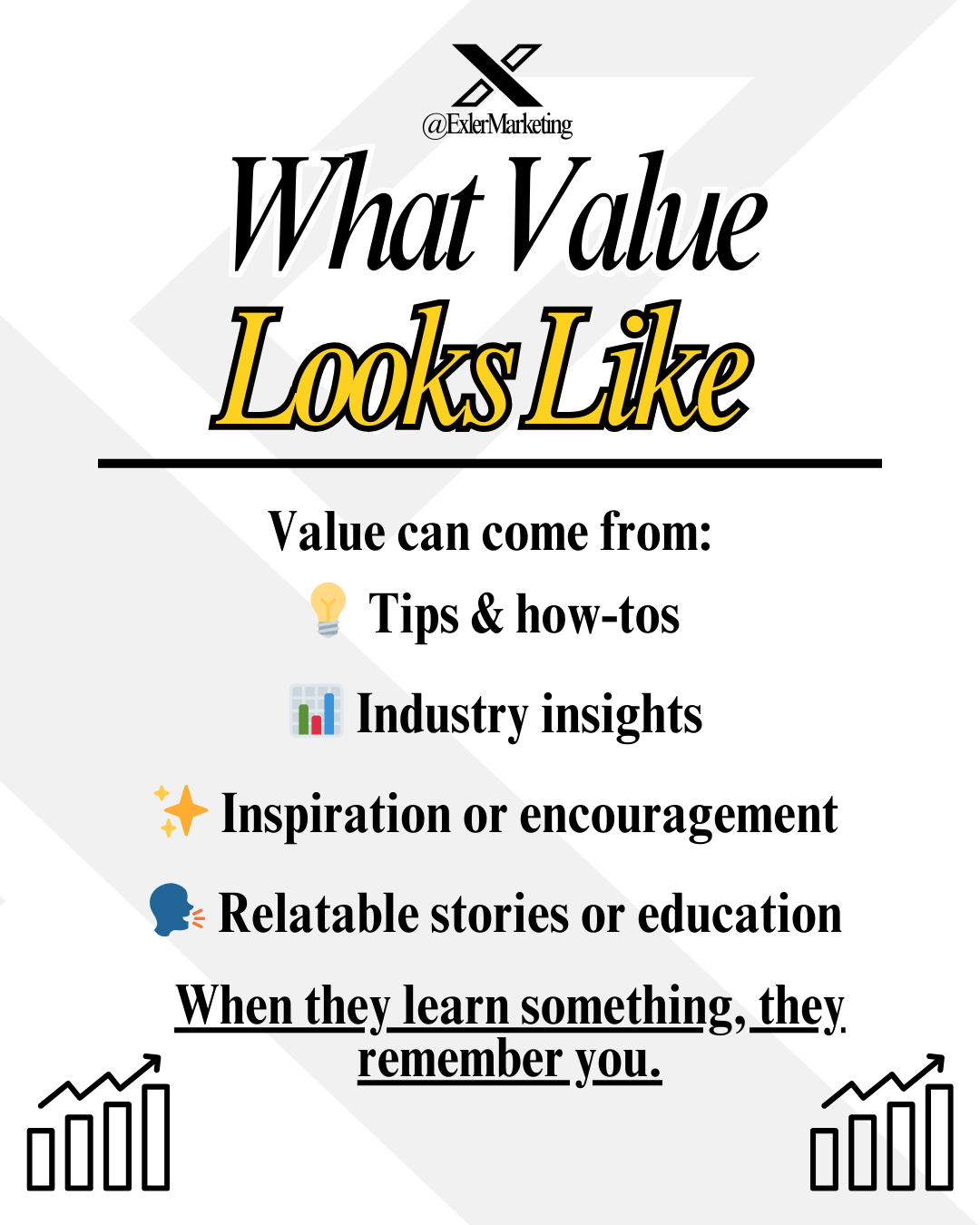
Providing value sounds simple, but it requires intention. Value often looks like education, practical tips, thoughtful breakdowns, or actionable how-tos that help someone solve a real problem. It can look like industry insight, sharing trends, offering perspective on changes in the market, or translating complex developments into digestible guidance. It can also take the form of inspiration and relatability: telling honest stories, sharing lessons learned, highlighting wins and setbacks, and offering encouragement that resonates. In each case, the goal is not to push a sale but to create progress for your audience. When someone learns something from you, feels understood by you, or is motivated because of you, they remember you.
The Psychology Behind Value-First Marketing
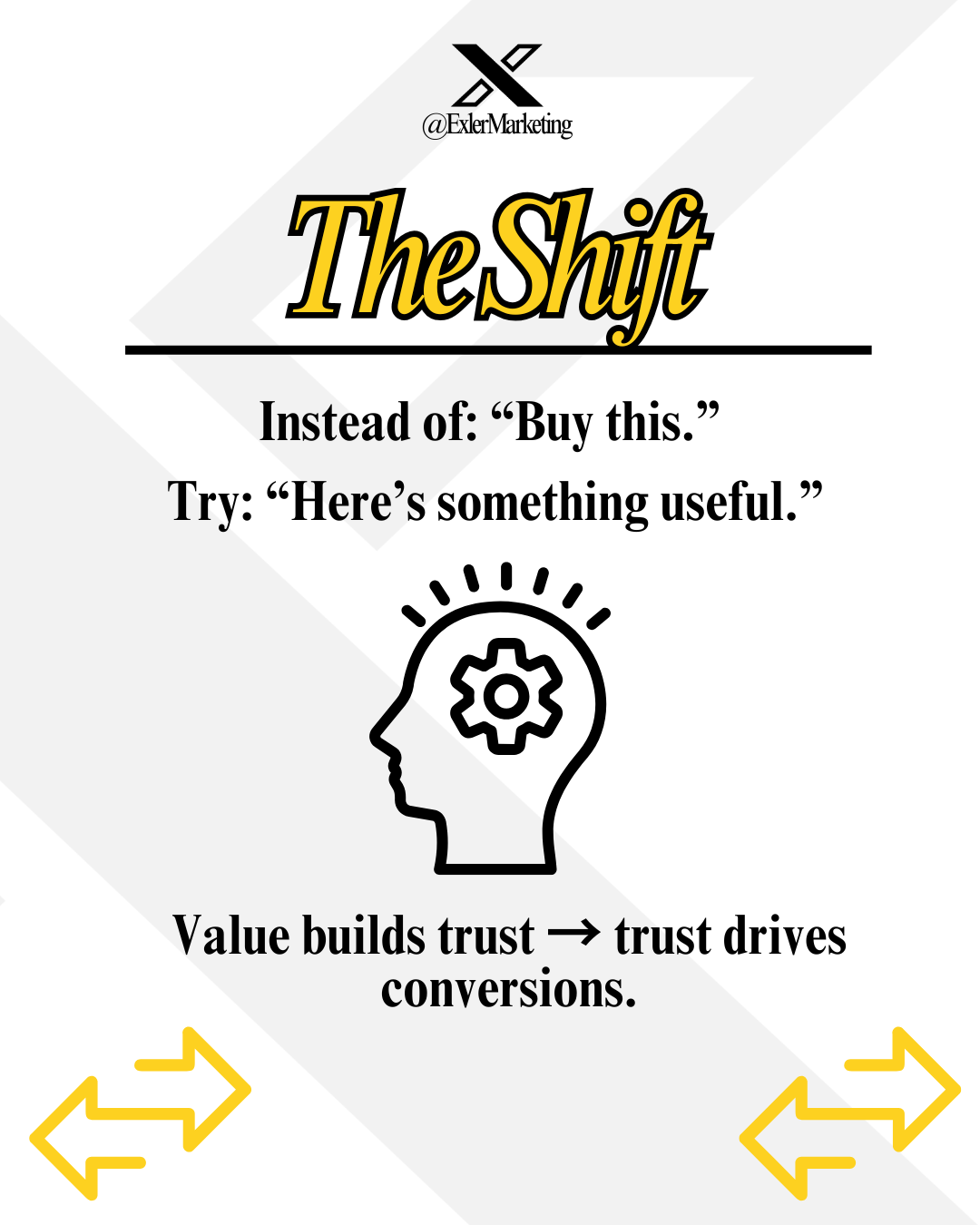
There is psychology behind this approach. When a brand consistently delivers helpful information, it builds authority. Authority builds credibility. Credibility builds trust. And trust reduces friction in decision-making. Instead of asking a customer to take a leap of faith when they see your offer, you’re building familiarity long before the sale ever happens. The progression is simple but powerful: value leads to trust, trust leads to loyalty, and loyalty leads to conversions. When you only sell, you are asking for trust upfront. When you provide value first, you earn it gradually, and that trust compounds over time.
Making the Shift From Selling to Serving
This doesn’t mean you stop promoting your services or products. It means you stop leading with the promotion. Instead of beginning with “Buy this” or “Sign up now,” you begin with “Here’s something useful” or “Here’s what we’re seeing in the market.” The tone shifts from transactional to helpful. The relationship shifts from seller and buyer to guide and learner. Over time, this changes how your audience perceives you. They no longer see your content as noise; they see it as something worth paying attention to.
How to Implement a Value-First Strategy
If you want to implement a value-first strategy, start by auditing your current messaging. Look at your recent posts, emails, and campaigns and ask yourself how much of your content is purely promotional versus genuinely helpful. Aim to rebalance with an 80/20 approach, 80 percent value-driven content and 20 percent direct promotion. Develop consistent content categories such as education, insights, inspiration, and storytelling so your audience knows what to expect. And measure engagement signals like saves, shares, and comments, which often indicate deeper impact than clicks alone.
At Exler Marketing, we help brands shift from transactional messaging to value-driven strategy, creating content that earns attention, builds authority, and drives long-term growth. If you’re ready to stop chasing engagement and start building trust that converts, let’s talk.
Because real growth doesn’t come from louder marketing. It comes from smarter, value-first strategy.
If you’re looking for more practical tips to help your business build trust and grow smarter, stick with us here on #TheGroundFloor. We’re going to continue sharing insights that help you level up your digital presence one step at a time. On Exler Marketing’s social media pages, we’re constantly sharing quick, practical marketing tips, so follow along for more!
Keep exploring #TheGroundFloor and stay connected with us on Facebook, Instagram, and LinkedIn.
