
TL;DR (Too Long; Didn’t Read): A strong content strategy starts with understanding what your audience needs. By identifying what your audience is asking, looking beyond your own content, and keeping track of gaps you discover, you can plan more relevant content that answers real questions and supports your marketing goals.

Coming up with new content ideas can be challenging, especially when you feel like you have already covered every topic in your industry. But before you start brainstorming something completely new, take a closer look at what your current content might be missing.
Your audience is constantly asking questions, searching for information, and looking for solutions to their problems. If your content does not address those needs, you could be missing opportunities to connect with potential customers and build trust.
Finding content gaps can help you create more useful posts, make better use of your existing content, and build a strategy around what your audience actually wants to know.
Find the Gaps
Start by looking at what your audience is asking, searching for, or struggling with. Then compare those needs to what your brand currently publishes.
Think about the questions customers frequently ask your team, the topics they engage with on social media, and the information they might need before choosing your products or services. Are there common questions you have not answered? Are there topics you mention briefly that could benefit from a more detailed explanation?
For example, if your business regularly shares posts about its services but rarely explains how those services solve specific customer problems, that could be a content gap worth addressing.
The goal is to identify the information your audience needs that your current content does not fully provide. This gives you a starting point for creating content that is more relevant, helpful, and connected to your business goals.
A clear strategy can make this process easier. Explore Exler Marketing's Digital Marketing Strategy services to learn how audience research, competitor analysis, and measurable objectives can help guide your marketing decisions.
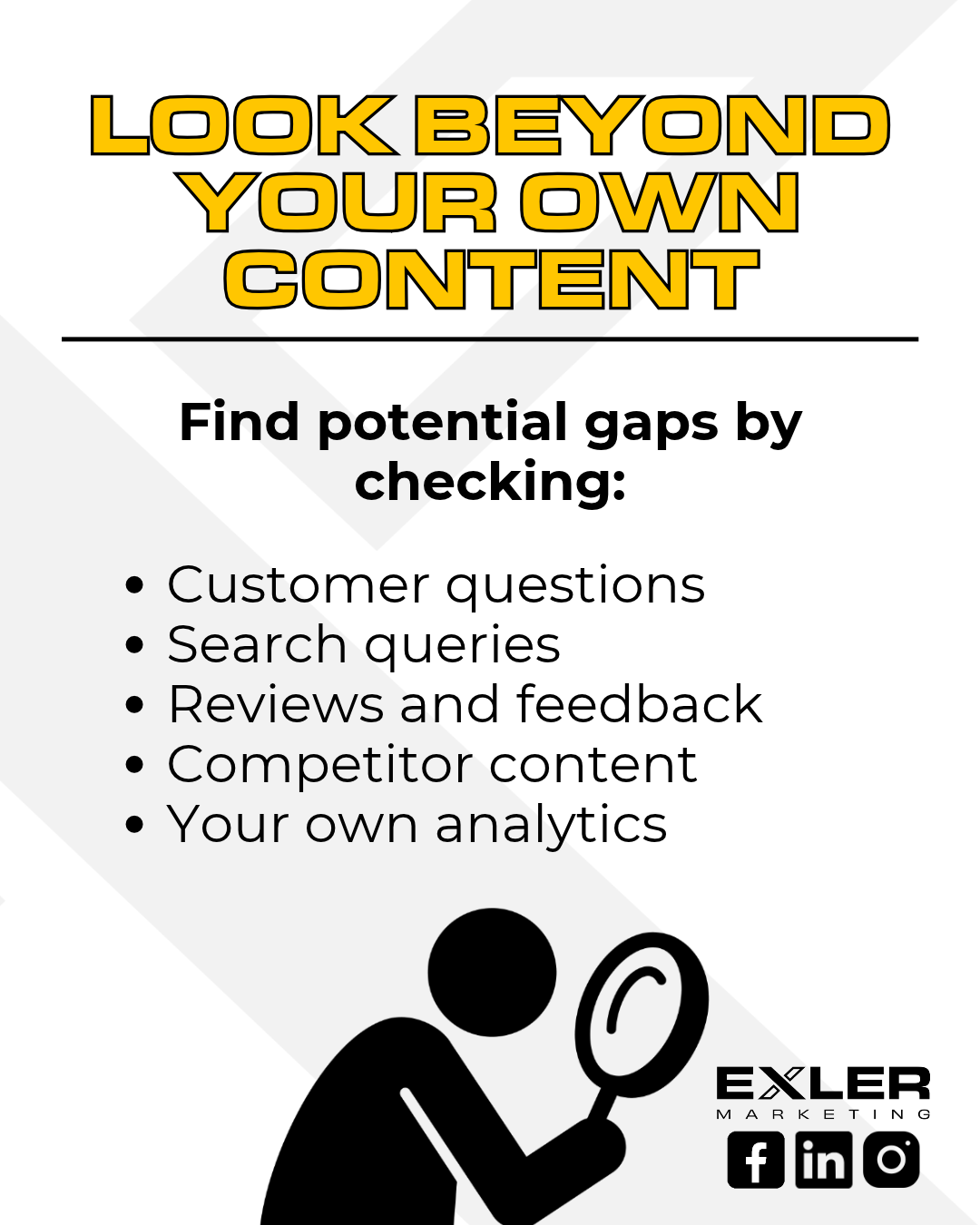
Look Beyond Your Own Content
Your existing posts are a good starting point, but they are not the only place to look for ideas. To find content gaps, consider what your audience is saying and what other businesses in your industry are publishing.
Here are five places to look:
Customer questions: Pay attention to frequently asked questions from customers and potential customers. These can become social media posts, blog articles, videos, or FAQs.
Search queries: Think about what people type into search engines when looking for information related to your business. These searches can reveal topics your content has not addressed.
Reviews and feedback: Look for recurring comments, concerns, and suggestions. Customer feedback can help you understand what people value and where they need more information.
Competitor content: Review what other businesses in your industry are discussing. Look for topics they cover that your brand has not addressed, or opportunities to offer a different perspective.
Your own analytics: Review engagement, reach, website traffic, and clicks to see which topics resonate with your audience and where your content could improve.
You do not need to copy what other businesses are doing or chase every trending topic. Instead, use these sources to identify opportunities that make sense for your audience and your brand.
If search queries are revealing topics your audience wants to learn more about, Exler Marketing's SEO services can help you explore keyword research, content creation, and other ways to improve your business's online visibility.
Keep a Running List
Once you start identifying content gaps, keep track of them. Ideas can come from a customer conversation one day and an analytics report the next, so having one place to organize them makes it easier to turn those insights into future posts.
Your list does not need to be complicated. A spreadsheet, document, or content calendar can help you keep everything organized. For each idea, consider noting:
The topic or question you want to address
Where the idea came from
Who the content is intended to help
The format that might work best, such as a carousel, video, or blog post
Its priority based on audience needs and business goals
When it is time to plan your next round of content, use this list to decide which topics deserve attention first. Focus on the gaps that matter most to your audience rather than trying to create a post for every idea you collect.
You can also revisit your list regularly. As your business evolves and your audience's needs change, new opportunities will emerge. Reviewing your content plan helps you keep your strategy useful and relevant over time.
Stop Guessing. Find the Gaps.
You do not have to reinvent your content strategy every month. Sometimes, the best ideas come from paying closer attention to what your audience already needs and finding ways to address it.
Start by identifying gaps in your current content, look beyond your own posts for new insights, and keep a running list of ideas to guide future planning. These simple steps can help you create content with a clearer purpose and make your marketing efforts more effective.
At Exler Marketing, we help businesses develop marketing strategies that make better use of their content, from planning and creation to ongoing optimization. If you are looking for help building a strategy for your business, visit ExlerMarketing.com to learn more.
If you’re looking for more practical tips to help your business build trust and grow smarter, stick with us here on #TheGroundFloor. We’re going to continue sharing insights that help you level up your digital presence one step at a time. On Exler Marketing’s social media pages, we’re constantly sharing quick, practical marketing tips, including the one featured here! Check it out on our Instagram here.
Keep exploring #TheGroundFloor and stay connected with us on Facebook, Instagram, and LinkedIn.
