
Understanding the Three Stages of the Marketing Funnel
TL;DR (Too Long; Didn’t Read): Your audience isn’t always ready to buy right away. Understanding where someone is in the customer journey can help you create content that meets them where they are. From building awareness to providing information during consideration and making the next step clear during conversion, your content should support your audience throughout the decision-making process.
Marketing content has different jobs depending on where someone is in the decision-making process. A person discovering your brand for the first time needs different information than someone who is already comparing your services. Treating every audience member the same can make your content feel repetitive or miss what they actually need.
The marketing funnel provides a useful way to think about those differences. The three main stages are awareness, consideration, and conversion. Understanding where your audience is in the process can help you create content that meets them where they are and gives them a clear next step.
The Awareness Stage: Introduce Your Brand
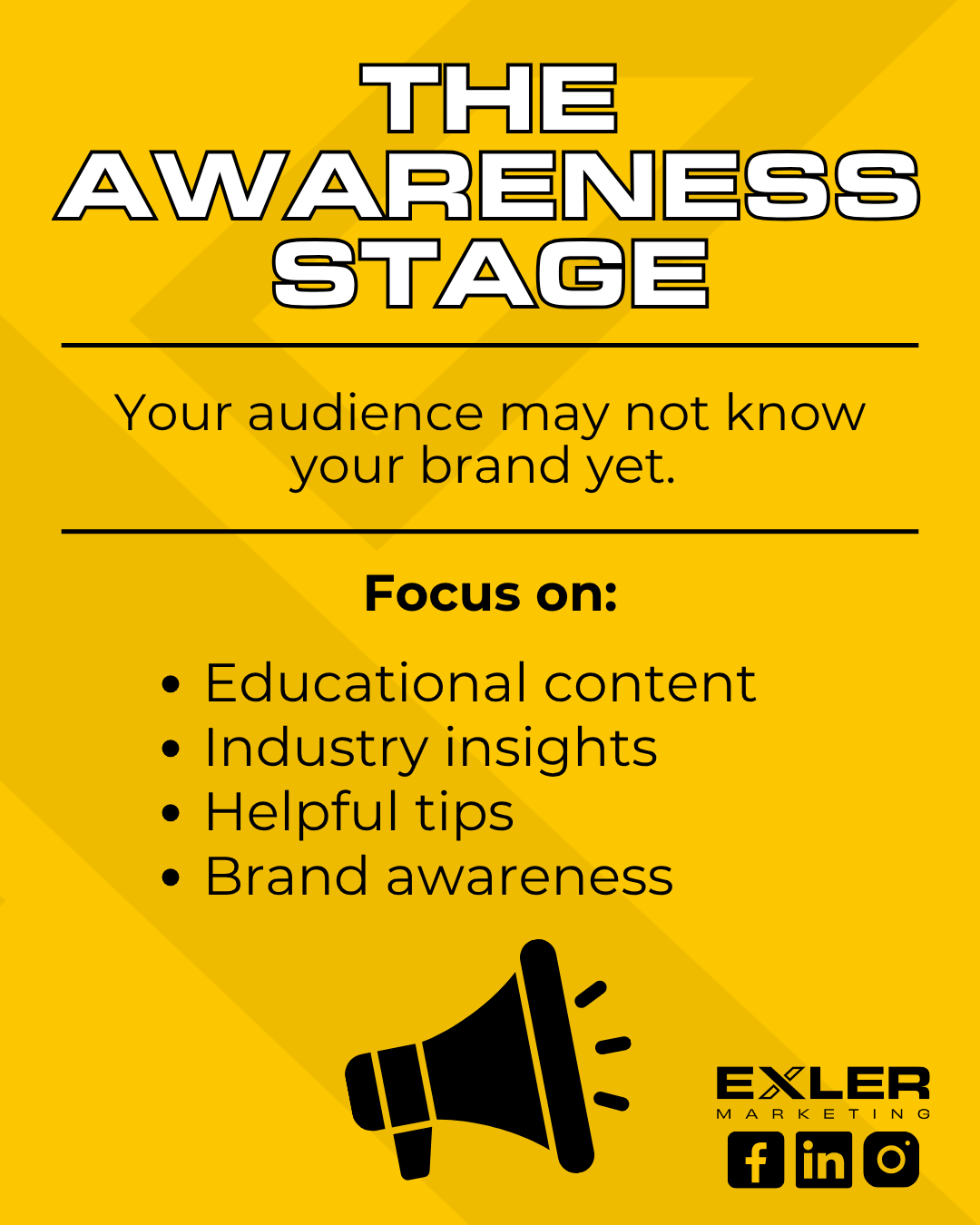
At the awareness stage, your audience may not know your brand yet. They may be discovering your business while searching for information, scrolling through social media, or looking for answers to a problem.
The goal at this stage is to build familiarity and give people a reason to pay attention. Educational content, industry insights, helpful tips, and brand awareness posts can help introduce your business without asking someone to make a major decision right away.
For example, a marketing agency could create content explaining common social media mistakes, sharing tips for improving a website, or discussing changes in digital marketing. Someone who finds that content may not be ready to hire an agency, but the information can give them an introduction to the brand.
Awareness content should give people something useful to take away. When they encounter your brand again later, they have some context for who you are and what you do.
The Consideration Stage: Give People a Reason to Choose You
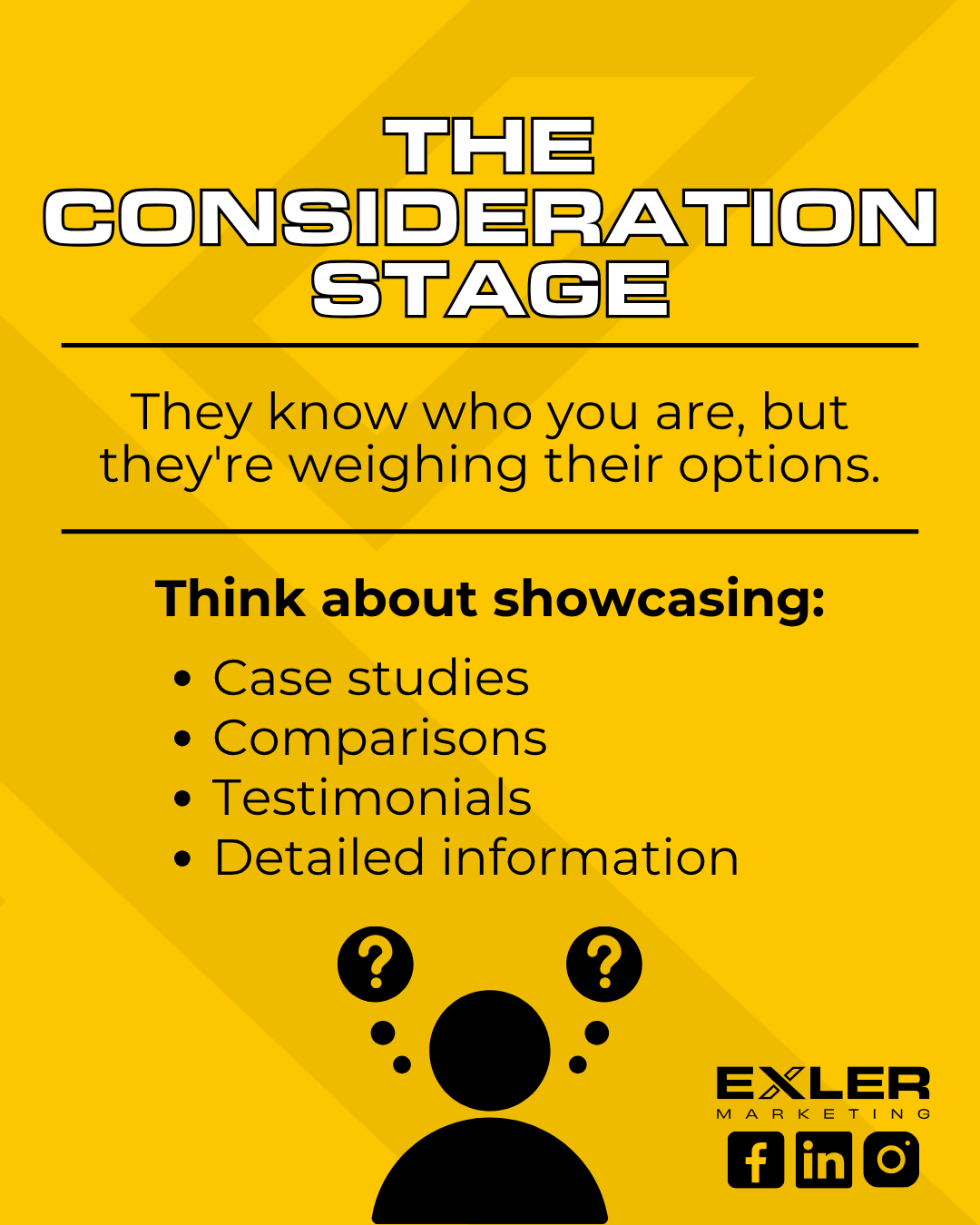
Once someone knows who you are, they may begin considering their options. At this point, they have more questions. They may want to understand what your business offers, how your services work, and how you compare with other options they are considering.
Content at the consideration stage can provide more detail and help potential customers evaluate your business. Case studies, comparisons, testimonials, and detailed service information can all play a role here. If you’re looking for help developing a social media strategy that meets your audience at each stage, explore our offerings here.
This is also a good time to show how your business approaches a specific problem. Instead of simply saying that you offer a service, explain what that service includes, what the process looks like, or what a client can expect.
For example, a business that offers website design could explain its process, share examples of previous projects, or highlight a client experience. That information gives someone more context as they decide whether the service fits their needs.
The consideration stage is about helping people make an informed comparison. Your content should answer the questions that come up once someone moves beyond simply discovering your brand.
The Conversion Stage: Make the Next Step Clear
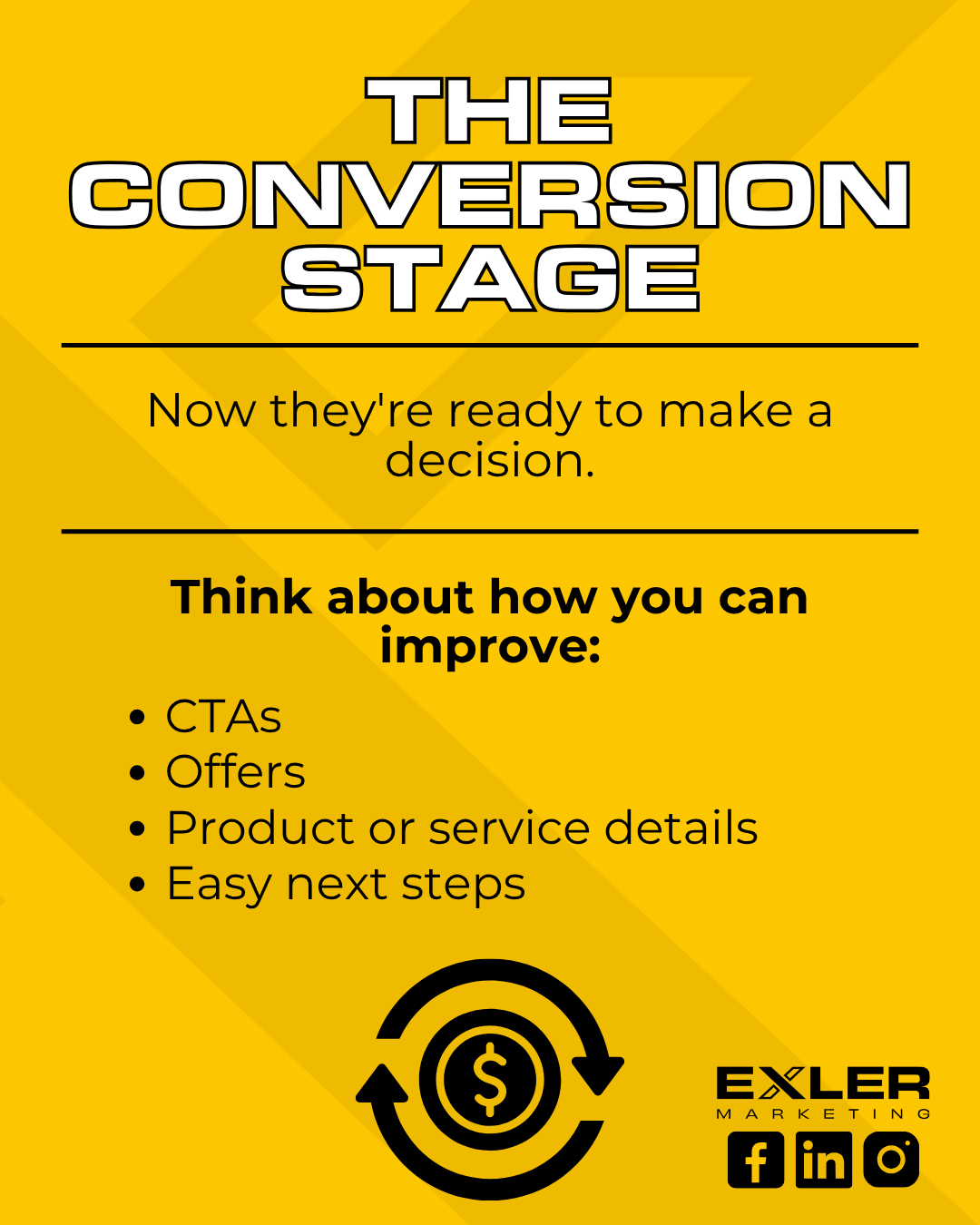
At the conversion stage, someone is ready to make a decision. They may already understand your brand and have considered your offering. Now, they need a clear path forward.
This is where your calls to action become especially important. A CTA should tell the audience what they can do next, whether that means scheduling a consultation, requesting more information, making a purchase, signing up for an email list, or contacting your team.
Your offer and product or service details also matter here. If someone has reached the point of considering a purchase, unclear information can create unnecessary friction. Make sure the next step is easy to understand and simple to complete.
This is also a good stage to review how your CTAs are performing. You can test different wording, placement, timing, offers, and design to see how your audience responds. A small change can affect whether someone takes the next step.
Build a Marketing Strategy Around Your Audience
The marketing funnel gives you a framework for thinking about what your audience needs at different points in the decision-making process. When awareness, consideration, and conversion content work together, your strategy has a clearer path from introducing your brand to encouraging action.
At Exler Marketing, we help businesses develop marketing strategies that connect content, social media, advertising, SEO, and other channels around their goals. Want to take a closer look at your marketing strategy? Visit ExlerMarketing.com to learn more.
If you’re looking for more practical tips to help your business build trust and grow smarter, stick with us here on #TheGroundFloor. We’re going to continue sharing insights that help you level up your digital presence one step at a time. On Exler Marketing’s social media pages, we’re constantly sharing quick, practical marketing tips, including the one featured here! Check it out on our Instagram here.
Keep exploring #TheGroundFloor and stay connected with us on Facebook, Instagram, and LinkedIn.
